Can Blocked Drains Affect Water Pressure? How to Tell a Drain Problem from a Pressure Problem

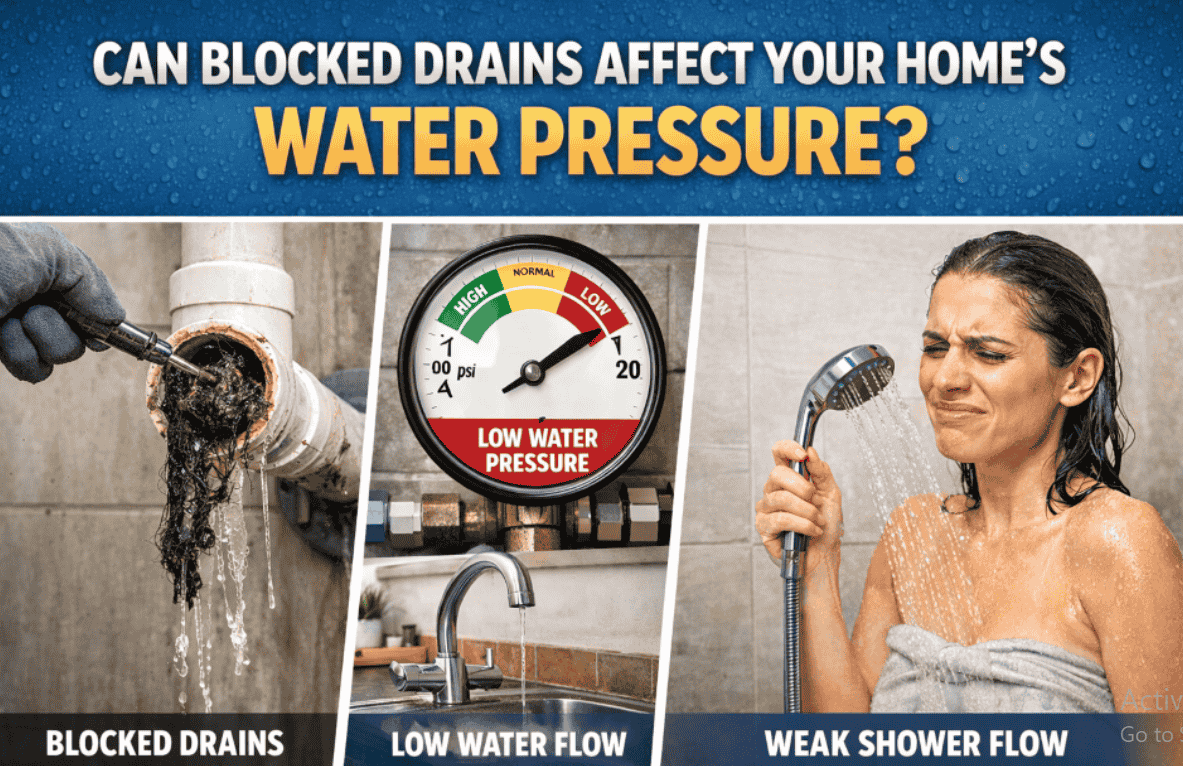
Ever turned on the shower and thought, “Why is the water pressure so weak today?” Or noticed the kitchen tap feels slower than usual when you are rinsing dishes? It is a common worry.
In most homes, a blocked drain will not reduce the pressure coming into your taps. But it can make things feel weak and frustrating because wastewater is not leaving the way it should. That distinction — between the pressure arriving at your home and the way water behaves once it is inside — is the key to working out what is actually wrong. This guide explains it, gives you quick checks you can do yourself, and tells you when it is time to call a plumber.
Water Pressure vs Water Flow (Quick Explanation)
People often say “pressure” when they really mean “flow”.
- Water pressure is the force pushing clean water through your pipes.
- Water flow is how much water you get over time.
Think of it like this: pressure is the push, flow is the outcome. You can have good pressure but poor flow if something is restricting the outlet (like a clogged aerator or showerhead). And you can have a normal stream, but everything still feels slow if the water is not draining away properly.
This matters because the fix depends entirely on which one is wrong. Low pressure is a supply-side problem: the water authority, your main valve, a leak, or a failing pressure-limiting valve. Poor flow at one tap is usually a local problem: a blocked aerator, a kinked hose, or a partially closed isolation valve. And a drain problem is a wastewater problem, on the other side of the system entirely. Treating a drain problem as a pressure problem wastes time and money; treating a pressure problem as a drain problem does the same.
How Blocked Drains Can Feel Like Low Pressure
A blockage creates a traffic jam on the wastewater side. That changes how taps, showers and toilets behave:
- Shower: water pools around your feet because it cannot drain fast enough, so the shower feels less effective. You are standing in water that should have left, and the shower feels weak even though the water arriving is perfectly fine.
- Kitchen: the sink fills quicker than it empties, making rinsing and washing feel awkward. You end up waiting for the sink to drain before you can rinse the next item.
- Toilet and nearby drains: gurgling or bubbling can show up when another tap is running, because blocked lines can disrupt airflow in the drain system. That gurgling is one of the most reliable signs of a drain problem: it means air is being pushed and pulled through trapped water as the system struggles to vent.
Common culprits include hair and soap build-up, grease and food scraps, wipes and sanitary items, and tree roots in older outdoor pipes. Hair and soap form a slow, sticky mat that narrows the pipe over months. Grease poured down a kitchen sink solidifies as it cools and catches everything that follows. Wipes — even ones labelled flushable — do not break down like toilet paper and are a leading cause of blockages. Tree roots seek out moisture and can enter through tiny cracks or joints in older pipes, then grow into a dense mat that traps everything else.
Drain Issue or Real Pressure Issue? Quick Clues
The fastest way to narrow it down is to look at the pattern. Drain problems and pressure problems behave differently, and the pattern usually gives the answer away.
It is more likely a drain issue if you notice:
- Slow-draining sinks or showers, pooling water, gurgling sounds or bad smells
- One fixture that feels “off” alongside slow drainage — the shower pools, or the basin empties slowly while the tap runs fine
It is more likely a real pressure or supply issue if:
- Multiple taps are weak across the house, including the outside garden tap
- Both hot and cold are weak (not just one side)
- You can see damp patches or water damage that could point to a leak
A single slow fixture with a healthy flow from the tap is almost always local — either the drain or the outlet fitting. The whole house going weak at once is almost always supply: the main valve, the pressure-limiting valve, a leak, or a problem with the water main. That pattern test takes thirty seconds and saves a lot of wrong turns.
Can a Drain Issue Indirectly Affect Pressure?
A drain blockage itself rarely changes water pressure. But repeated blockages can cause overflows and stress pipe joints. Over time, that can expose weak points and contribute to leaks on the supply side, which can reduce pressure and flow.
Common Causes of Low Water Pressure That Are Not Drain-Related
If drainage looks normal, these are common reasons for genuine low pressure:
- Partially closed main shut-off valve or an isolation valve under a sink. This is the first thing to check, because it is the easiest fix and a surprisingly common cause — often after plumbing work, when a valve is left half-closed.
- Clogged tap aerator, showerhead or filter screen. Mineral deposits and grit build up in the fine mesh and strangle the flow. This affects one fixture, not the whole house.
- Failing pressure-limiting valve. Most homes have a valve that caps incoming pressure to protect the plumbing. When it fails, pressure can drop across the whole house.
- Scale build-up or corrosion in older plumbing. Galvanised pipes narrow from the inside over decades, and the flow drops gradually — so gradually that owners often do not notice until it is severe.
- Hidden leak in the water supply line. Water escaping before it reaches your taps reduces both pressure and flow, and often shows up as damp patches, unusually green lawn, or a water bill that jumps without explanation.
- Hot water only issues, often linked to a tempering valve or the hot water unit. If cold is fine but hot is weak everywhere, the problem is on the hot side, not the supply.
Simple at-Home Checks
You do not need to be a plumber to narrow this down. These checks take only a few minutes:
- Test a few fixtures. Try the shower, kitchen and laundry. If it is only one spot, the issue is often local.
- Check hot vs cold. If cold is fine but hot is weak, the issue is likely on the hot water side.
- Try the outside tap. If the garden tap is weak too, it points to supply or pressure rather than drains.
- Look at drainage and listen. Does the sink empty quickly? Does the shower pool? Do you hear gurgling when another tap runs?
- Clean the aerator or showerhead (if safe). Blocked screens are a very common cause of poor flow. Unscrew the aerator, rinse out grit, and soak it in vinegar if there is scale. Renters should check with their landlord or agent before removing fittings.
Avoid harsh drain chemicals if blockages keep returning. They can damage pipes and they will not fix bigger issues like roots, broken joints or collapsed sections — that warning comes from the original post and is worth repeating, because chemical drain cleaners are the most common first response and the least effective one for recurring problems. A plunger and a drain snake will do more good, and neither damages your pipes.
When to Call a Plumber (and What Pros Do)
If multiple drains are slow, water is backing up, you have sewage smells, or the same blockage keeps coming back, it is time to get it checked properly.
This is where professional drain clearing makes a big difference. A licensed plumber can clear the blockage without pushing it further down the line, and can confirm whether there is a deeper issue like roots or damaged pipework. CCTV inspections are often used for recurring problems to pinpoint the exact cause and location, according to the original — a camera goes down the pipe and shows exactly what is there, which beats guessing and digging. Expect a professional to ask about the history: how long it has been slow, whether it is one fixture or several, and whether it has been cleared before.
Call sooner rather than later if you see sewage backing up, if water is coming up through a floor waste, or if the blockage affects the only toilet in the house. Those are not wait-and-see situations.
Related Drainage Issues Around the Property
Outdoor drainage matters too, especially after heavy rain. If you notice pooling water, slow yard grates or overflow at stormwater points, your drainage system may be under strain.
In those cases, Stormwater drain repair can be the missing piece. Blocked or damaged stormwater lines can overflow in the wrong places and add pressure to already struggling drainage paths around the home.
Frequently Asked Questions
Can a blocked drain lower my water pressure?
Usually not directly. A blocked drain affects wastewater leaving your home, which makes fixtures feel weak, but the pressure arriving at your taps is a separate system. Repeated blockages may contribute to leaks over time, which can reduce pressure — but that is indirect, and the original flags it as a possibility, not a certainty.
Why does my shower feel weak but the tap is fine?
Check the showerhead and its filter for scale and grit, and check whether the shower is draining slowly. A pooling shower feels weak even when the incoming flow is normal.
Why is only the hot water weak?
If cold is fine and hot is weak at every tap, the problem is likely the tempering valve or the hot water unit — not the drains and not the main supply.
When should I call a plumber?
When multiple drains are slow, water is backing up, there are sewage smells, or the same blockage keeps returning. Sooner if sewage is involved.
Conclusion
Blocked drains can affect how your water pressure feels, but the real issue is usually poor drainage and restricted flow, not the pressure coming into your home. A few quick checks can help you work out what is going on. If symptoms keep returning or several fixtures are affected, getting expert help early can save a lot of hassle.
For ongoing issues, Blocked drain repair Sydney is the smartest next step to protect your plumbing and get things running smoothly again.