Is a BDS Course the Right Choice for Your Dental Career? Eligibility, Duration and Honest Self-Check

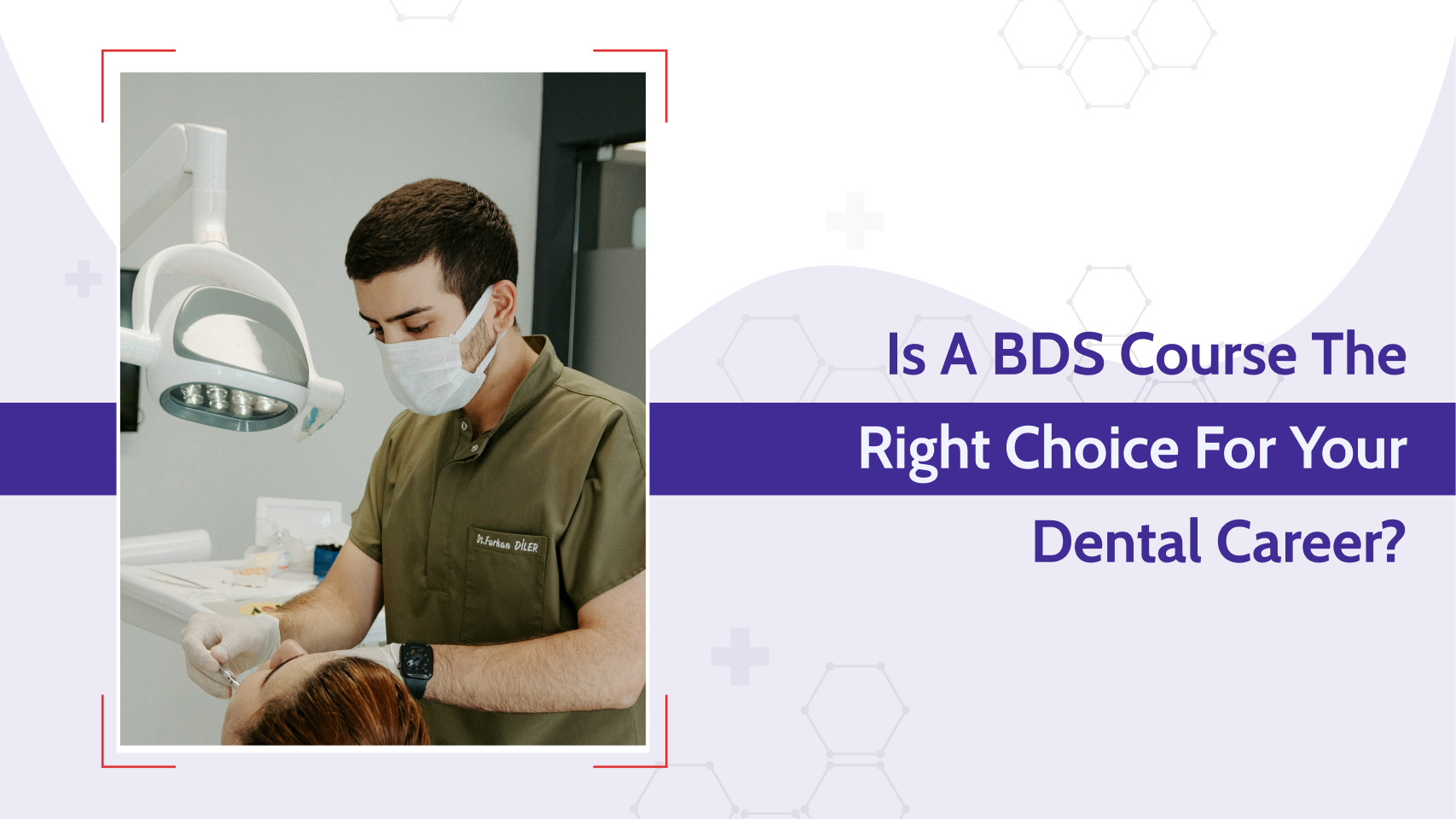
Dentistry is a field that is constantly evolving, raising its standards with innovations ranging from 3D-printed dental implants to artificial intelligence diagnostic systems. At the same time, people are becoming more conscious of oral hygiene, and the rise in cosmetic dentistry is a genuine boom for anyone planning a career in the field.
Are you considering dentistry, but still unsure whether the BDS course at the best BDS colleges in India suits you? This guide gives you the facts — duration, eligibility, admission — and then asks the seven honest questions the original post poses, so you can decide with your eyes open.
Overview of the BDS Course
The Bachelor of Dental Surgery (BDS) is a broad-based undergraduate program that produces dental graduates equipped with the knowledge and skills to practise dentistry. Using both academic theory and a hands-on approach, the course covers oral anatomy, disease processes, dental treatment and patient handling.
Graduates from top dental colleges in MP and other states can choose to practise in a particular field, start their own practice, or work in government service, hospitals or — as the original notes — insurance companies. That last option is a niche path rather than a standard one, and it is flagged here as the original’s suggestion rather than a common career route. For most graduates, the realistic choices are general practice, specialisation, or academic work.
Duration
The BDS course generally takes five years: four academic years and one compulsory internship year. That structure ensures students gain both theoretical knowledge and clinical practical experience. The internship year is where the learning becomes real — treating actual patients, under supervision, in a dental college and hospital setting.
Eligibility Requirements
To be eligible for the BDS course, a candidate must have passed 10+2 or equivalent with Physics, Chemistry and Biology as pre-medical subjects. They must also obtain the necessary scores in the entrance examination — for most dental colleges, that means NEET.
Admission Procedure
The main entry requirement for BDS is the National Eligibility cum Entrance Test (NEET). Based on the candidate’s NEET merit, they are admitted to a dental college, with seats allotted through counselling conducted by the respective state or central government. A strong NEET rank matters: it determines not only admission but which college you can choose.
Assess If the BDS Course Is the Right Choice: Seven Questions
If you are interested in patients’ oral health and the field of dentistry in general, BDS might be a very good foundation for your career. But “interested” is a vague word. The seven questions below, taken from the original post, are designed to make it specific.
1. Have you always been an altruistic person, with a lot of interest in health sciences?
Dentistry is a practical healthcare profession dedicated to healthy mouths and whole-person care. If you are interested in biology and have always wondered how the human body functions — particularly the teeth, gums and jaw — then BDS is worth considering. But altruism alone is not enough: you also need to enjoy the science, because the first years are heavy with anatomy, physiology and biochemistry.
2. Do you think you are handy?
Manual dexterity is critical in dentistry. The work involves precise, small-scale procedures inside the mouth, often in awkward positions and under time pressure. If you enjoy fine, detailed hand work — drawing, model-making, craft, playing an instrument — that is a good sign. If you are clumsy with your hands or dislike close, detailed work, dentistry will frustrate you daily.
3. Are you detail-oriented, and do you have patience?
Dental procedures such as fillings and surgery can take considerable time, and precision is compulsory. A filling that is a millimetre off can cause pain for years. Candidates planning to take BDS at any dental college and hospital should have a detail-oriented attitude and patience — not just in the clinic, but in study, where the volume of material to master is large.
4. Do you want a secure and well-paid job?
The original post says the stability of a BDS career is very good, that dentists are highly sought after, and that positions are available in public and private settings. That is the original’s view, and it has a basis: oral healthcare is a permanent need, and qualified dentists can work almost anywhere. After BDS, graduates have the option of further specialising in a branch such as orthodontics or periodontics, or starting their own clinic — which makes dentistry a career offering both employment and self-employment.
But read the claim with care. Earnings rise with experience, skill, specialisation and geographical area, as the original’s own FAQ admits. A new graduate in a saturated city market will not earn what an experienced specialist in an underserved area earns. The original also calls the return on investment “lucrative”, but BDS can be considerably costly, especially in private institutions, and no fee figures are given here because the original gives none. Before committing, compare the total cost of the course with realistic early-career earnings, not with the earnings of a senior specialist.
5. Would you like an academic and practical learning period?
BDS normally spans five years, including a year of internship for practical sessions. But the learning does not stop at graduation. Dental technologies and treatments advance constantly — new materials, new imaging, new techniques — and a dentist who stops learning falls behind within a few years. If you enjoy studying and are willing to keep doing it throughout your career, that is a strength. If you want a degree after which you never open a textbook again, dentistry is a poor choice.
6. Are you prepared for the cost of education?
BDS can be considerably costly depending on the institution, and it is costlier still in private institutions. That cost includes not only tuition but instruments, materials, and the years of income forgone while studying. The original argues the return can be lucrative, since dentists are usually well paid — but that return arrives over years, not months. Discuss the full cost with your family before applying, and check whether scholarships, loans or government seats are available to you.
7. Can you handle exhausting conditions in your career?
Dentistry can be demanding both physically and mentally. You may work long hours, especially if you are a freelancer or own a private practice. The physical strain — leaning over patients, holding awkward postures, concentrating intensely — accumulates over years, and the mental pressure of responsibility for patients’ health and pain is real. Think carefully about whether you want a balanced work and lifestyle, and what you are willing to trade for it.
If you love healthcare, especially dentistry, and are willing to study hard and spend significantly on your education, then yes — BDS could be a good fit. If several of these questions gave you pause, that pause is information. Listen to it.
What Can You Do After BDS?
BDS graduates can practise as general dental practitioners, choose a dental speciality, start a clinic of their own, or work as a professor or researcher in an academic position. Specialists are paid significantly more, according to the original post, and earnings rise with experience, skill and geographical area. The degree is also a foundation for further study: an MDS (Master of Dental Surgery) in a speciality such as orthodontics, periodontics, prosthodontics or oral surgery opens the highest-earning paths in the profession.
Frequently Asked Questions
What is the duration of the BDS course?
BDS is a five-year course in total: four years of academic sessions and a final year dedicated to internship.
What are the eligibility criteria for BDS?
Candidates should have passed 10+2 with Physics, Chemistry and Biology, and should also clear the NEET exam, according to the original post.
What are the career options after completing a BDS degree?
Graduates can practise as general dental practitioners, choose a dental speciality, start a clinic, or work as a professor or researcher in an academic position.
What is the scope of dentistry in terms of earning potential?
Specialists are paid significantly more, and earnings rise with experience, skill and geographical area, as the original notes. Early-career earnings vary widely by location and type of practice.
The Bottom Line
The BDS course at the best BDS colleges in India is a good option for people who are interested in oral healthcare, willing to work hard, and looking for a stable profession. Given the trends in clinical practice and specialisation, BDS is a sound basis for future professional activity.
But it is not a decision to make lightly. It costs five years, significant money, and sustained effort — and it demands manual skill, patience and stamina that not everyone has. If you are prepared for the academic challenge, the practical experience the curriculum provides, and the financial commitment, BDS can open the door to a rewarding career in a constantly developing and respected field. If you are not, it is far better to discover that now, before you enrol, than five years from now.