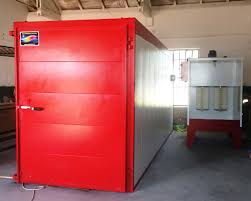
When it comes to powder coating, precision is everything. From application to the curing stage, every step must be executed with care to achieve a flawless, long-lasting finish. Powder coating ovens play a critical role in this process, and understanding how they manage heat can make all the difference between a high-quality product and a costly mistake.
The core problem is a narrow one. Cure the coating too hot, or for too long, and the finish degrades. Cure it too cool, or too briefly, and it never properly bonds. The line between the two is fine, and this guide explains how to stay on it: temperature control, heat distribution, material sensitivity, the damage overheating and underheating cause, energy efficiency, and the monitoring systems that keep it all in check.
1. Precision Temperature Control for Avoiding Surface Imperfections
Temperature control is the backbone of powder coating ovens. These ovens are designed to operate within a specific range — typically between 350°F and 400°F, according to the original post — to ensure the powder melts evenly and bonds seamlessly to the surface. That range is the original’s figure, and it is a useful rule of thumb, but treat it as a starting point rather than a specification: the correct cure temperature and time depend on the specific powder formulation and the substrate, and the powder manufacturer’s technical data sheet is what governs in practice. Always cure to the data sheet, not to a general range.
If the temperature deviates even slightly, imperfections can form, leading to uneven finishes or a rough texture that diminishes the final product’s appearance. Overheating can cause the powder to over-melt, pooling in certain areas and creating an unsightly surface. Underheating leaves the powder partially cured, resulting in a chalky or uneven finish. To prevent this, powder coating ovens are equipped with advanced thermostats and sensors that maintain consistent heat levels. Operators who understand the nuances of their equipment can fine-tune these systems to deliver excellent results — though the original’s suggestion that fine-tuning alone guarantees flawless results even for intricate or irregularly shaped parts is optimistic. Complex geometry remains genuinely difficult to cure evenly, because thick and thin sections of the same part heat at different rates, and no thermostat setting removes that physics.
The practical lesson is to know your oven’s actual behaviour, not just its set point. Verify temperatures with an independent probe or a temperature-recording device run through the oven with a part, and check more than one location. A display that reads 375°F does not prove every part of the chamber is at 375°F.
2. Heat Distribution Balance for Consistent Coating Cures
Uniform heat distribution is just as important as maintaining the correct temperature. Powder coating ovens rely on forced-air convection systems to circulate heated air evenly throughout the curing chamber, ensuring that all parts of the coated object — regardless of size or placement — receive the same amount of heat.
Without proper airflow, certain areas might remain cooler while others overheat, leading to inconsistent curing. That imbalance can weaken the coating’s durability and aesthetic appeal. A well-designed powder coating oven eliminates this risk by using strategically placed vents and fans to distribute heat uniformly. For operators, monitoring airflow and occasionally adjusting the oven’s configuration are essential practices for maintaining optimal performance.
Loading matters as much as the oven itself. Parts hung too close together shield each other from airflow; parts placed near the door or the exhaust run cooler than parts in the centre. Space parts so air can move around them, keep the load consistent from batch to batch, and re-check temperatures whenever you change the loading pattern. An oven that cures perfectly with a light load may under-cure the same parts when it is packed full.
3. Material Sensitivities That Demand Exact Temperature Settings
Different materials require different curing temperatures, and powder coating ovens must adapt to these demands. The original post gives the example that lightweight aluminium components often need lower temperatures than heavier steel parts to prevent warping or distortion. That is a useful generalisation from the original, but treat it as a factor to consider rather than a rule: thermal mass, part geometry, wall thickness and the powder type all influence what a part can tolerate and what it needs.
Operators must also consider the specific powder formulation being used. Each type of powder has its own melting point and flow characteristics, which dictate the ideal curing temperature. Misjudging these variables can result in coatings that crack, peel or fail to adhere properly. By staying informed about the materials and powders they work with — reading the data sheets, noting what worked last time, and recording settings per job — professionals can make the most of their powder coating ovens and deliver consistent, high-quality finishes.
Keep a simple job log — powder type, substrate, set point, measured part temperature and bake time — so that when a finish fails you can find the cause instead of guessing.
4. Risks of Overheating Leading to Coating Damage or Weakening
Overheating is a silent culprit that can compromise the integrity of a powder coating. When temperatures climb too high, or the part stays hot for too long, the powder may over-bake, leading to discoloration, brittleness, or a weakened bond with the substrate. The finish may look acceptable at first glance and then fail in service — chipping, cracking or losing gloss far earlier than it should.
This risk is particularly pronounced in high-volume industrial operations, where slight variations in heat can affect thousands of parts before anyone notices. Advanced monitoring systems in modern powder coating ovens help mitigate these risks by providing real-time temperature feedback and alerts. But technology only reports the problem; it is up to operators to remain vigilant and make timely adjustments to prevent overheating from damaging production quality.
Watch for the early signs: yellowing or darkening of light colours, loss of gloss, a brittle feel, or reduced adhesion in a cross-hatch test. If you see them, check the actual part temperature first — a faulty sensor or a changed load can push the real temperature well above the set point.
5. Challenges of Underheating Resulting in Incomplete Curing
Underheating poses its own set of challenges. When a powder coating oven fails to reach the necessary curing temperature, the powder does not fully melt or adhere to the surface. The result is a finish that lacks durability and can easily chip, scratch or peel under normal use — the classic sign of an under-cured coating.
Incomplete curing is often caused by improper preheating, uneven heat distribution, or inadequate bake times. To address it, operators must ensure their ovens are properly calibrated and that parts are loaded in a way that allows maximum heat exposure. Regular maintenance of heating elements and airflow systems is also critical to preventing underheating: a failing element, a clogged filter or a worn fan can all reduce the heat a part actually receives, even while the controller insists everything is normal.
Note that the cure clock starts when the part reaches temperature, not when the oven door closes. A heavy steel part may take many minutes to reach the powder’s cure temperature, and that heat-up time must be included in the schedule. Timing the bake from the door closing is one of the most common causes of under-curing.
6. Energy Efficiency Optimised Through Accurate Heat Management
Energy efficiency is not just about saving money; it is also about maximising the effectiveness of the powder coating oven. Precise temperature management ensures the oven does not consume excess energy by overheating or running longer than necessary.
Modern powder coating ovens are built with advanced insulation and heat recovery systems that minimise energy waste. These features, combined with accurate thermostatic controls, help businesses reduce their environmental impact while maintaining high production standards. Operators who prioritise energy efficiency often find their ovens perform better over the long term, requiring fewer repairs and consuming less power.
Simple habits help too: avoid opening the door unnecessarily, load efficiently, maintain door seals, and switch the oven off rather than idling it hot between batches.
7. Advanced Monitoring Systems Ensuring Proper Temperature Maintenance
State-of-the-art powder coating ovens are equipped with advanced monitoring systems that take the guesswork out of temperature management. These systems use digital displays, infrared sensors and automated alerts to keep operators informed about the oven’s performance in real time.
This technology not only ensures accurate temperature control but also helps identify potential issues before they escalate. If a heating element begins to fail or airflow becomes obstructed, the monitoring system can alert operators to take corrective action. These proactive features make modern powder coating ovens indispensable for maintaining high-quality finishes and reducing production downtime.
But monitoring is only as good as its calibration. Verify sensors against an independent thermometer on a schedule, keep records of what the system reported versus what an independent probe measured, and investigate discrepancies rather than assuming the display is right. A sensor that drifts slowly is worse than one that fails outright, because it produces confident, wrong readings for weeks.
A Practical Checklist for Every Cure
Before each production run, work through these checks:
- Confirm the powder’s cure schedule from its technical data sheet — temperature and time at the part, not at the oven wall.
- Verify the oven’s actual temperature with an independent probe in more than one location.
- Check that heating elements, fans and filters are clean and working.
- Load parts with space for airflow, and keep the loading pattern consistent.
- Include heat-up time in the bake schedule, especially for heavy parts.
- Inspect the first parts of each batch for gloss, colour, adhesion and texture before running the rest.
- Log the settings and results for each job, so failures can be traced.
Frequently Asked Questions
What temperature do powder coating ovens run at?
The original post gives a typical range of 350°F to 400°F. That is the original’s general figure; the correct schedule for any job comes from the specific powder manufacturer’s technical data sheet.
What happens if powder coating overheats?
Over-baking can cause discoloration, brittleness, loss of gloss and a weakened bond with the substrate, leading to early chipping or cracking in service.
What happens if powder coating underheats?
The powder does not fully melt or bond, leaving a chalky or uneven finish that chips, scratches and peels easily under normal use.
Why is heat distribution important in a powder coating oven?
Because parts in cooler spots under-cure while parts in hotter spots over-cure. Forced-air convection, good loading and working fans keep the temperature even across the chamber.
The Bottom Line
Powder coating succeeds or fails on temperature, and the margin is fine. Too hot and the coating discolours, embrittles and weakens; too cool and it never bonds, leaving a finish that chips and peels. The seven factors in this guide — precise control, even heat distribution, material awareness, vigilance against overheating and underheating, energy-efficient operation and reliable monitoring — all serve one goal: getting every part to the right temperature, for the right time, every time. Trust the powder manufacturer’s data sheet over any general range, verify what your oven is actually doing rather than what its display says, and keep records so that when a finish fails, you can find out why instead of guessing.